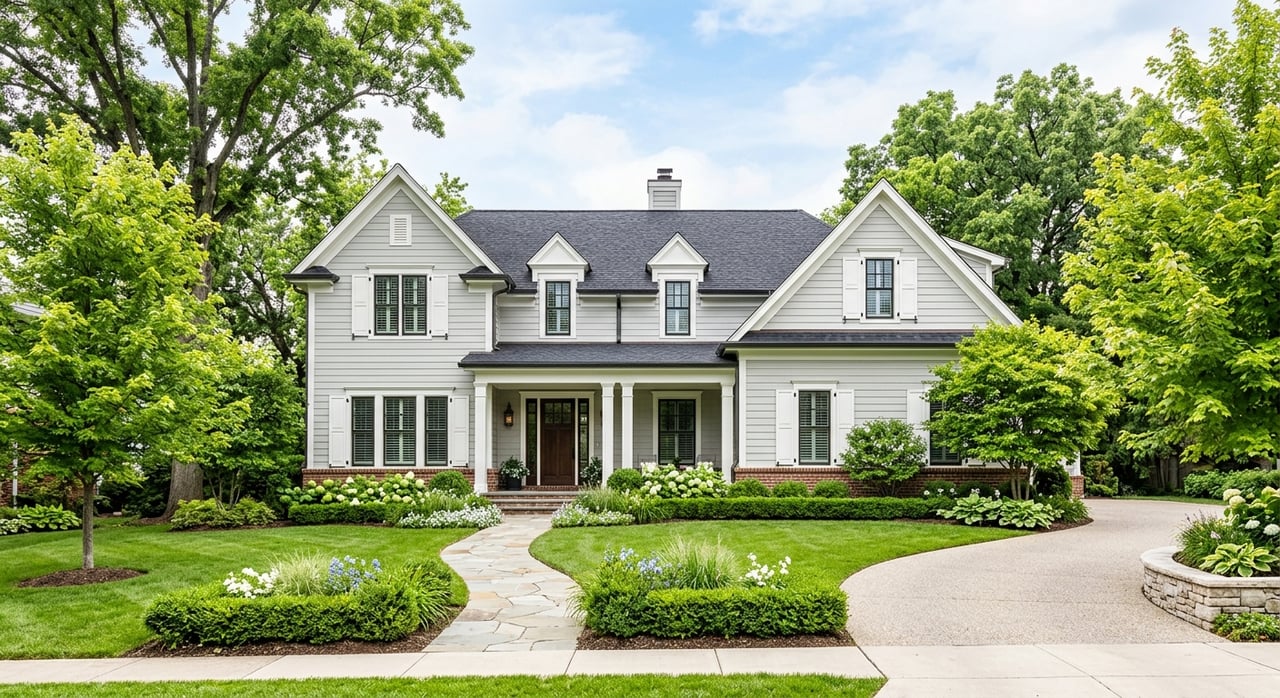
Wondering if your current home still fits your life in Overland Park? That question comes up for many homeowners when space feels tight, the layout no longer works, or a long-term move starts to make more sense than another round of compromises. If you are weighing a larger home, this guide will help you look at the local market, your equity, your timing, and the main paths forward so you can make a smart, confident decision. Let’s dive in.
Why Overland Park Owners Are Asking Now
A move-up decision is always personal, but the Overland Park market adds an important financial layer. The city is part of a comparatively high-income housing market, with a Census Bureau estimate of $104,834 for median household income and $413,600 for the median value of owner-occupied housing units. In Johnson County, median household income is estimated at $109,208, which helps explain why many homeowners here are thinking carefully about how to use the equity they have built.
Local sales data also shows a market that remains fairly tight. Johnson County’s March 2026 update reported a $470,000 median sales price, a $583,269 average sales price, 39 days on market until sale, 1.8 months of supply, and buyers receiving 100.3% of original list price on average. For you as a homeowner, that can point to continued demand for well-priced homes and a market where timing and pricing strategy matter.
At the same time, affordability is still a real part of the conversation. Freddie Mac reported a 6.30% average for a 30-year fixed mortgage as of April 30, 2026. That means your next move is not just about what your current home might sell for, but also what the next monthly payment looks like once your new loan, taxes, insurance, and ongoing upkeep are included.
Signs It May Be Time to Move Up
The clearest signs usually have less to do with trends and more to do with your daily life. If your home no longer fits your household, your layout creates friction, or you now need a dedicated office or flex space, those are practical reasons to consider a move. A larger home can make sense when it supports how you actually live, not just how you hoped the space would work.
It also helps if you expect the next home to be a long-term fit. Consumer guidance in the research suggests buying can be risky and expensive if you expect to move again within just a few years, since you would absorb another round of selling costs. In other words, a move-up purchase is often easier to justify when you are solving for the next chapter, not just the next couple of years.
You may also be ready if your current home has appreciated enough to create usable equity. Equity can help fund your next down payment and cover some of the costs that come with selling and buying. When that equity gives you real flexibility instead of stretching you thin, the move becomes easier to evaluate.
How to Know if the Numbers Work
Before you start touring homes, it helps to run a simple reality check. Home equity is the difference between what your home is worth and what you still owe on your mortgage. For many move-up buyers, that equity is the starting point for the next purchase.
A healthy move-up plan usually accounts for more than the down payment. Consumer guidance in the research notes that closing costs often run 2% to 5% of the purchase price. It also recommends keeping an emergency cushion of 3 to 6 months of expenses, which matters even more if your monthly payment will rise.
A practical way to look at it is this: after your sale, will you have enough proceeds to cover the next down payment, closing costs, moving costs, and a reserve? If the answer is yes, you may be in a solid position to move forward. If not, it may be worth waiting, adjusting your target price range, or exploring different financing structures.
What Move-Up Buyers Should Budget For
When homeowners think about moving up, they often focus first on price. The better question is total cost. Your next home may come with a larger mortgage, but that is only part of the picture.
Make room in your budget for:
- Down payment on the next home
- Purchase closing costs
- Selling costs on your current home
- Moving expenses
- Higher property taxes and insurance
- Maintenance and upkeep on a larger property
- An emergency reserve after closing
This is where a local, consultative plan matters. In a market like Overland Park, the right move is not always the biggest home you can qualify for. It is the home you can buy comfortably while still protecting your flexibility.
Financing Options for a Move-Up Purchase
Most move-up buyers start with proceeds from the sale of their current home. Still, there are a few common tools that can help, especially if the timing between selling and buying is tricky.
Sale Proceeds From Your Current Home
For many homeowners, this is the cleanest option. You sell your current home, use the net proceeds for the next purchase, and reduce the chance of carrying two housing payments at once. In a market with limited inventory, this approach can require good planning, but it often creates the clearest financial picture.
HELOC or Home Equity Loan
A HELOC allows you to borrow against your equity during a draw period, while a home equity loan is typically a lump sum with a fixed rate. Both are usually second mortgages if your first mortgage stays in place. These tools can help with access to cash, but they also use your home as collateral and generally require significant equity.
Cash-Out Refinance
A cash-out refinance replaces your current mortgage with a larger one so you can tap equity. This can be useful in some cases, but the tradeoff matters. In a rate environment above 6%, replacing a lower existing mortgage with a larger new loan can raise both your risk and your monthly cost.
Bridge or Swing Loan
Bridge financing can help you buy before selling by using your current residence as security for short-term financing. Research guidance shows this option requires the lender to document your ability to carry the new home payment, the current home payment, the bridge loan, and other obligations. That makes it a specialized tool for well-qualified homeowners with strong cash flow.
Should You Sell First or Buy First?
This is one of the biggest move-up questions, and there is no one-size-fits-all answer. The right path depends on your finances, your comfort with risk, and how much flexibility you need.
Sell First for More Certainty
Selling first is often the safer route. It reduces the chance that you will carry two mortgage payments and gives you a clear picture of your net proceeds before you commit to the next purchase. Research also notes that sellers should account for upfront costs, market conditions, and the reality that a home can become harder to sell the longer it sits.
Buy First for More Flexibility
Buying first can make the search feel less rushed. You can shop carefully and move only once, which many homeowners find appealing. But this path is usually only realistic if you can qualify for temporary overlap or use bridge financing responsibly.
Use a Home Sale Contingency Carefully
A home sale contingency can protect you if selling your current home is essential to buying the next one. The tradeoff is that it adds risk for the seller, which can weaken your offer in a competitive market. In Johnson County’s tight inventory conditions, that is an important consideration.
A Smart Move-Up Plan for Overland Park
If you are trying to decide whether now is the right time, focus on a few key questions instead of chasing perfect timing. Markets change, but a clear plan can help you move with confidence.
Ask yourself:
- Does your current home still support your daily life?
- Do you expect the next home to fit for the long term?
- Do you have enough equity for the next purchase and a reserve?
- Can the new monthly payment work comfortably at current rates?
- Do you know whether selling first or buying first makes more sense for your situation?
If you can answer those questions clearly, you are already ahead of most homeowners. A strong move-up plan should map out your likely sale proceeds, target purchase range, payment comfort level, financing options, and ideal sequence of events.
Why Local Guidance Matters
Move-up decisions involve more than finding a bigger house. You need pricing strategy for your current home, realistic expectations for inventory, and a plan that coordinates sale timing, purchase timing, and financing. In a market like Overland Park, small mistakes in sequence or pricing can create unnecessary stress.
That is why a neighborhood-focused, data-informed approach can make such a difference. When you work with an advisor who understands the Kansas City metro, you can look at your options through both a lifestyle lens and a financial one. The goal is not to push you into a move. It is to help you decide whether moving up truly improves your next chapter.
If you are thinking about making a move in Overland Park, Paul Michael Galbrecht can help you evaluate your home’s value, map out your net proceeds, and build a step-by-step plan for buying and selling with more clarity.
FAQs
How do I know if I have enough equity to move up in Overland Park?
- A good baseline is having enough equity to cover your next down payment, closing costs, moving costs, and still keep a 3 to 6 month emergency reserve.
What does the Overland Park housing market look like for move-up buyers?
- Johnson County’s March 2026 data showed a $470,000 median sales price, 1.8 months of supply, and buyers paying 100.3% of original list price on average, which points to a still-competitive market.
Is it better to sell first or buy first when moving up in Overland Park?
- Selling first often reduces financial risk because it lowers the chance of carrying two housing payments, while buying first may offer more flexibility if you have strong cash flow or short-term financing options.
What financing options can help with a move-up purchase in Overland Park?
- Common options include using sale proceeds, a HELOC, a home equity loan, a cash-out refinance, or in some cases a bridge loan, depending on your equity, income, and timing needs.
Can a home sale contingency hurt my offer in Overland Park?
- Yes, it can make your offer less attractive because it adds uncertainty for the seller, which can be a bigger factor in a market with limited inventory.
What monthly costs should I compare before moving up in Overland Park?
- You should compare the full monthly cost of the next home, including mortgage payment, property taxes, insurance, and expected upkeep, not just the purchase price alone.