"Every year, you lose a band of professions that can afford to live in Prairie Village."
That's Mayor Eric Mikkelson, describing what's happened to his city's housing market over the past decade. He's talking about teachers, nurses, and firefighters, people who used to be able to buy a home in Prairie Village and increasingly can't. The number behind his frustration is not in dispute: a decade ago, the average appraised value of a Prairie Village home sat around $245,000. In 2026, it topped $600,000.
If you're actually shopping in Prairie Village right now, though, that citywide average tells you almost nothing about what you'll pay for a specific house. Ask five different sources what a home here costs today and you'll get five different answers, and the spread between them isn't measurement error. It's the shape of the market.
Five numbers, one real explanation
In 2026 alone, tracking sources have put Prairie Village's median sale price at roughly $554,000 in March, the median list price at $600,000 in August, and the typical home value in the mid-$400,000s. Price per square foot, measured citywide in March, came in around $284, down 6 percent from a year earlier even as headline prices rose.
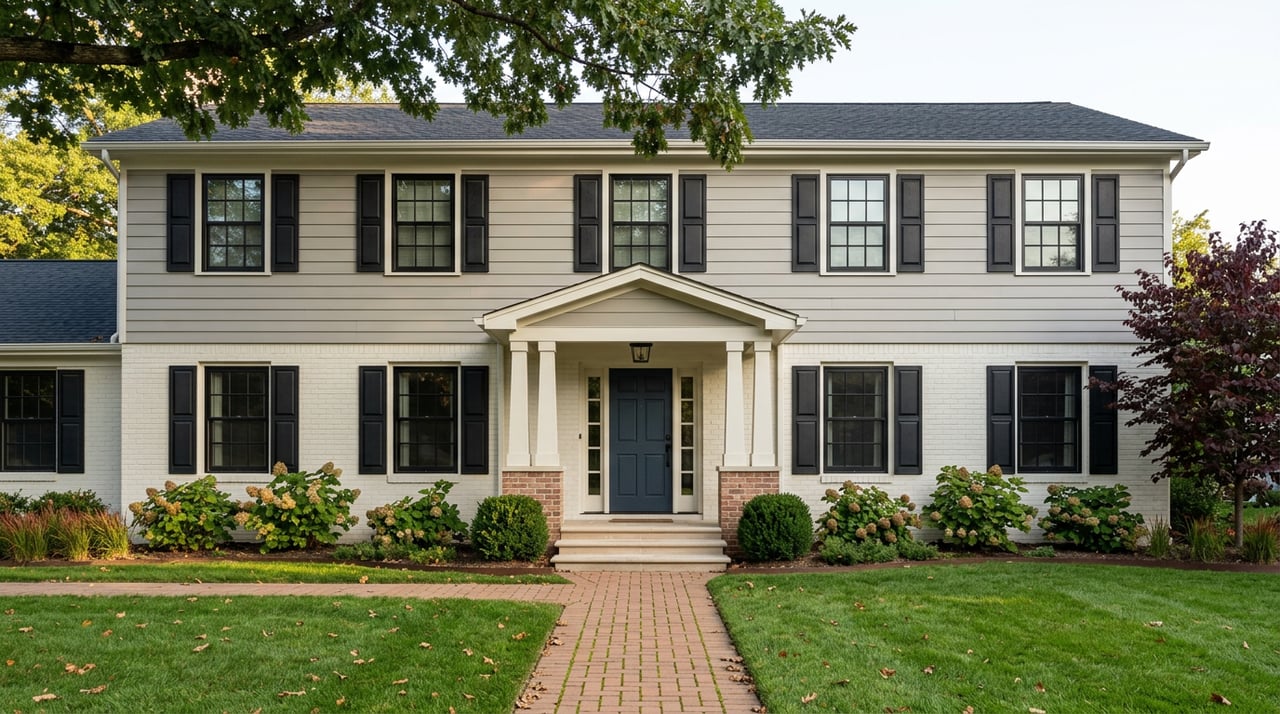
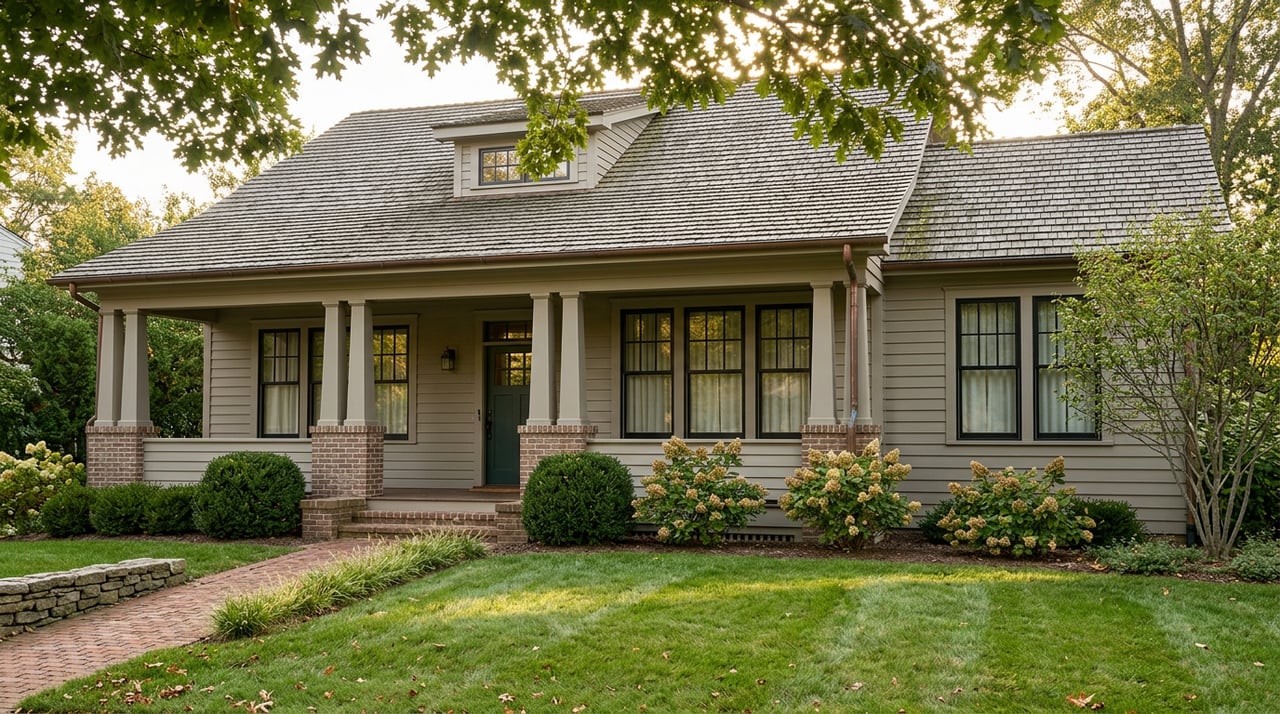
Those numbers don't disagree because someone made a mistake. They disagree because a median sale price, a median list price, an automated valuation model, and a per-square-foot average are each sampling a different slice of a market that has split into two distinct products sharing the same ZIP codes. One is a 1940s-to-1960s ranch that's never been touched or has had a kitchen redo. The other is what replaced the ranch two doors down. Blend those into a single citywide figure and you get a number that describes neither one accurately.
One street, two kinds of house
Recent closed sales make the split concrete. A home on Juniper Lane, built in 1960, sold in March 2026 at $273 a square foot. A brand-new build on West 69th Terrace, finished the same year, sold that same March at $385 a square foot. Same city, same month, and more than a hundred-dollar-per-square-foot gap between them.
Zoom out and the pattern holds. Recent listings have included a 1952 expanded ranch at $415,000, a 1957 home at $469,000, and a 1973 home at $535,000. On the other end, recently listed teardown-rebuilds have clustered between $1.49 million and $1.75 million, typically 3,800 to 4,500 square feet on lots around 7,500 square feet, replacing exactly the kind of home listed above.
What this means for a buyer is simple but easy to miss when you're anchored on a single median: you're not choosing a price point in Prairie Village so much as choosing which of two products you want, and the citywide number you saw on a portal search was never built to help you make that choice. A move-up buyer comparing "Prairie Village" to a neighboring suburb needs to ask which Prairie Village they're pricing, not just what the neighborhood costs.
Why the rebuilds can't just keep getting bigger
The reason the luxury rebuild market caps out where it does, rather than escalating into ever-larger houses, traces back to a set of rules the city has held steady since 2019. Prairie Village's neighborhood design guidelines, adopted after a genuinely contentious debate over teardown-rebuilds, limit the height and mass of new construction and require a percentage of green space that scales with lot size. In February 2025, the planning commission looked at whether to reopen those guidelines and decided against it, reasoning that a rule needs roughly a decade on the books before anyone can honestly evaluate its effect.
That stability matters more than it sounds like it should. It means a builder replacing a ranch can't simply maximize square footage to chase the highest price. The size ceiling is fixed, so competition within the rebuild market happens on finish level, layout, and lot placement instead, which is part of why new construction commands $300 to $385 a square foot rather than spreading across a wider range. The rules didn't just limit what gets built. They shaped how the rebuild market prices itself.
The state law that could redraw the map
That regulatory stability is now facing pressure from outside the city. Senate Bill 418, a statewide "by-right housing" law signed earlier in 2026, removes some of the administrative steps cities use to slow or shape home construction and opens the door to duplexes and townhomes being built next to single-family homes without a rezoning. Prairie Village joined Mission, Merriam, Roeland Park, and Westwood Hills in a joint letter opposing the bill, calling it a one-size-fits-all mandate. It's a statewide law regardless, and cities have to comply.
As of this month, Prairie Village has only just begun figuring out what compliance looks like, with the planning commission holding a preliminary discussion on August 4 and city staff signaling the topic will move to a full council conversation later this year. Neighboring cities are moving faster. Roeland Park's city council voted 6-0 on August 17 to update its zoning code for SB 418 compliance, including allowing accessory dwelling units by right instead of requiring a special use permit. Westwood approved residential construction under 2,500 square feet using 2018 building codes back in June to get ahead of the same requirement.
Here's why that matters to the ranch-versus-rebuild split above: the two-tier pricing structure has existed inside a stable regulatory box for years, one where a buyer could reasonably predict what could and couldn't go up on the lot next door. That box is being pried open at the state level right now, and nobody, including the city, knows exactly what the final shape will be. A buyer choosing a lot today because of what currently sits on either side of it is making that decision inside rules that may look different within a couple of years.
What this already looks like on the ground
You don't have to wait for SB 418 to see the city experimenting with density on redevelopment sites. The 4.82-acre former Paul Henson YMCA property, sold to developer Price Brothers in July 2025, is now moving through the approval process as a 20-home cul-de-sac fronting a new street connecting to Delmar Street. The planning commission approved rezoning the parcel from a larger-lot single-family district to a smaller-lot one this June, along with a preliminary plat, though commissioners flagged concerns about how close the homes will sit to the sidewalk given the proposed grading.
That project didn't need a new state law. It happened under the existing framework, on a site that used to hold a community amenity rather than houses. It's a preview of the kind of smaller-lot single-family infill Prairie Village is already comfortable approving, separate from whatever SB 418 eventually requires.
What to actually do with this if you're comparing suburbs
If you're cross-shopping Prairie Village against Overland Park, Brookside, or another Johnson County suburb, the citywide median is the least useful number available to you. Two better questions:
- What did comparable homes on this specific block or street actually sell for per square foot in the last twelve months, not the ZIP code average?
- Is this lot inside a stretch where teardown-rebuilds have already happened, and if so, what do the current design guidelines allow a new owner to build there next?
Both questions have real, checkable answers. The median headline doesn't.
A few questions worth asking directly
If I buy an original ranch, could a rebuild go up right next door? Under the current design guidelines, yes, as long as it meets the height, mass, and green-space standards in place since 2019. Those rules constrain size but don't prevent teardown-rebuilds from happening.
Does SB 418 mean duplexes could show up on any single-family street in Prairie Village? Not automatically, and not yet. As of August 2026 the city is still working through what compliance requires. It's a real shift to watch over the next year, not a change that's already been implemented citywide.
How do I tell which of the two markets a specific listing actually belongs to? Compare price per square foot and lot size against recent sales on the same block, not the citywide median. A listing priced near the average can still be significantly overpriced or underpriced once you know whether it's competing against original homes or rebuilds.
Prairie Village rewards buyers who ask sharper questions than the portal median can answer. If you're weighing this neighborhood against others in the metro and want someone to walk through specific streets, recent comparable sales, and what the city's current rules would actually allow on a given lot, Paul Michael Homes can help you start from your own numbers instead of a citywide average. Schedule a free consultation to get a clearer picture before you make an offer.